Softening a room with framed moss art: what preserved moss wall displays do for interior texture
Why indoor texture matters more than you might think
A room that feels flat often lacks surface variety. Hard floors, painted walls, glass tables, and metal shelves all reflect light the same way. They give the eye nothing to settle on. Adding a soft, tactile surface changes that balance without requiring a full redesign. That is where framed moss art comes in. By bringing a natural, quiet texture into a space, it creates a visual anchor that feels different from everything else around it.
Preserved moss is not a living plant. It has been treated so it stays soft and green without water, soil, or sunlight. That makes it a practical option for indoor display. You can place it on a wall where a live plant would struggle, and it will keep its look for years with almost no care. The surface is dense and slightly spongy, which gives it a distinct feel compared to smooth paint, rough brick, or matte wallpaper.
What preserved moss actually is
Most preserved moss used in wall art comes from species such as sheet moss, cushion moss, or reindeer moss. These are harvested, dried, and then treated with a glycerin-based solution that replaces the natural moisture. The result is a material that stays flexible and retains its shape and colour. Unlike dried moss that crumbles, preserved moss keeps a soft, pliable texture. It does not need misting or trimming, and it will not attract pests when kept indoors.
Colour variation is part of the appeal. Natural mosses range from deep greens to pale yellow-greens, and some preserved pieces are dyed to produce blues, oranges, or purples. That allows you to match the artwork to your room palette without losing the organic feel. The texture itself varies too. Reindeer moss has a coral-like branching structure, while sheet moss lies flat and fine. Combining them in one piece adds depth.
How framed moss art changes a room
Wall displays that use preserved moss do more than hang on a wall. They introduce a surface that catches light unevenly, creating shadows and highlights that shift as you move through the room. That softness contrasts with hard edges and flat surfaces, making the space feel warmer and more layered. The effect is subtle, but it draws the eye in a way that a painting or photograph often does not.
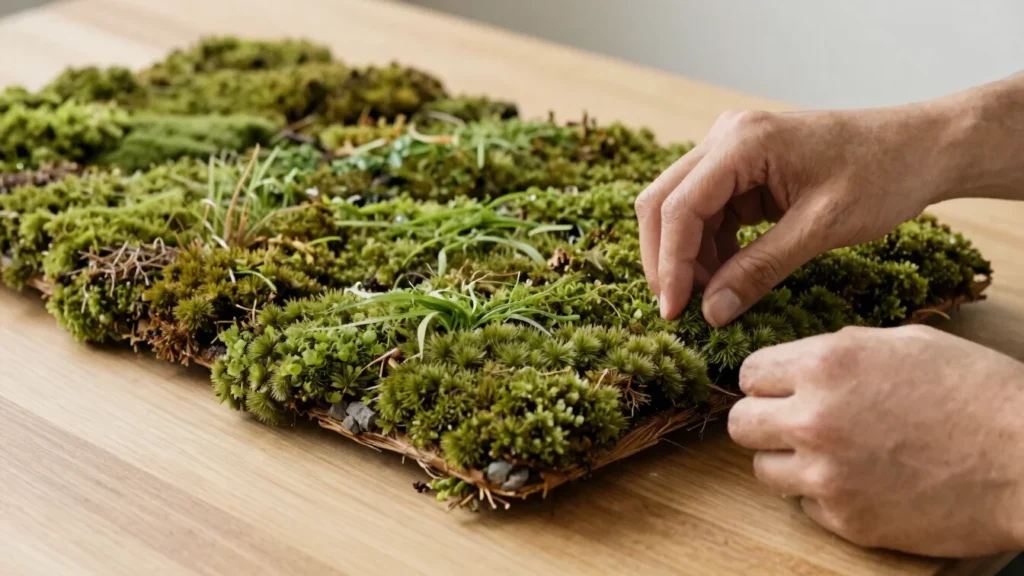
Acoustically, moss also helps. The porous surface absorbs a small amount of sound, which can reduce echo in a room with hard floors and bare walls. It is not a replacement for acoustic panels, but it contributes to a quieter environment in a natural way.
What to look for in a piece
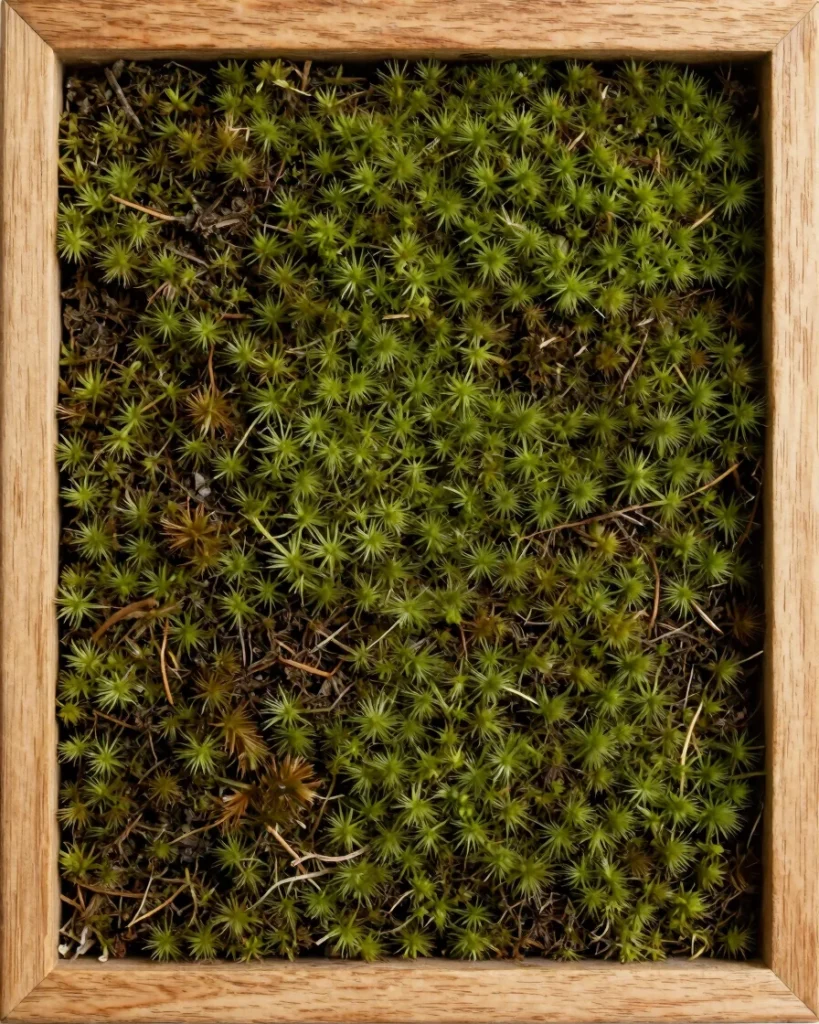
When choosing a ready-made piece or planning your own, consider the frame first. A wood frame tends to complement the organic look better than glossy metal, though a simple black or white frame can work if the moss is the focus. The depth of the frame matters too. A deeper frame allows for thicker layers of moss and more texture. A shallow frame works for a flatter, more minimalist look.
The moss itself should be evenly covered and securely attached. Loose pieces can fall off over time, especially if the board is handled or moved. A well-made piece has the moss fixed to a backing board with adhesive, then fitted snugly inside the frame. You can check the quality by looking at the edges: there should be no bare patches or visible glue.
One use of the phrase finished preserved moss artwork belongs in a middle paragraph, so here it is: A properly made, finished preserved moss artwork will hold its texture for years if kept out of direct sun and away from humidity. That stability is what makes it a practical choice for long-term display.
Where to place it indoors
Location affects how the moss looks over time. Direct sunlight can fade the colour of preserved moss, especially dyed varieties. A wall that gets indirect light will keep the moss looking richer for longer. Bathrooms and kitchens can work, provided the humidity is not extreme. A steamy bathroom may cause condensation to form on the frame glass, but the moss itself is sealed and will not absorb the moisture. Still, a dry living room or hallway is the safest bet.
Mounted at eye level, a single framed piece acts as a focal point. Grouping several smaller frames together creates a grid or cluster that feels like a living wall without the maintenance. You can mix different moss types in different frames, or keep them uniform for a cleaner look.

Maintenance that stays simple
Preserved moss needs almost no care. Dust can settle on the surface over time, especially if the frame is open-faced. A light blast from a hair dryer on a cool setting or a soft brush will remove it. Do not use water or cleaning sprays. Moisture can break down the preservation treatment and cause the moss to rot or grow mould.
If the piece is sealed behind glass, it will stay clean longer. The glass also protects the moss from accidental contact. The trade-off is that glass can create glare, so consider the lighting in the room before choosing a sealed frame. An open frame gives a more direct, tactile experience but needs occasional dusting.
Design ideas for different spaces
In a home office, a single framed moss piece behind the desk adds a calming natural element without the distraction of a live plant that needs watering. In a living room, a large horizontal piece above a sofa anchors the seating area. The soft texture contrasts with the upholstery and creates a visual break between the furniture and the wall.
For a hallway or entryway, a narrow vertical piece works well beside a mirror or coat rack. The moss adds a welcoming touch without taking up floor space. In a bedroom, a small piece above the bed can replace a headboard, especially if you prefer a minimalist look. The moss softens the wall and makes the sleeping area feel more restful.
Another use of the exact phrase: When you choose a finished preserved moss artwork, you are selecting a piece that will stay the same season after season, with no fading or shedding. That reliability makes it a straightforward way to bring nature indoors without committing to plant care.
What to watch out for
Not all preserved moss is the same quality. Lower-grade moss can shed pieces or lose colour within a year. Check whether the moss is dyed or naturally preserved. Dyed moss can look vivid, but the colour may fade faster in bright light. Natural shades hold up better over time. Also check the frame construction. A frame with a dust seal on the back will keep out more debris and help the piece last longer.
If you are making your own display, use a backing board that is rigid enough to support the moss without sagging. Foam core or thin plywood works well. Attach the moss with a strong adhesive that is safe for indoor use, such as a clear silicone or a hot glue gun. Let the adhesive cure fully before mounting the frame.
The takeaway without the label
Framed moss art works because it fills a gap that other wall decor leaves open. Paintings add colour, photographs add memory, and mirrors add light, but only a soft, textured surface adds the kind of tactile warmth that makes a room feel lived in. Preserved moss does that without the upkeep of live plants. It is a practical, long-lasting way to bring a piece of the outdoors inside, and it fits almost any room style from modern to rustic. Whether you buy a ready-made piece or assemble your own, the result is a wall display that feels natural, quiet, and enduring.